L-Citrulline HCL
The amino acid that raises arginine levels more effectively than arginine does, and the reason it is in this formula at all.
Why L-Citrulline HCL Is in Memodyne
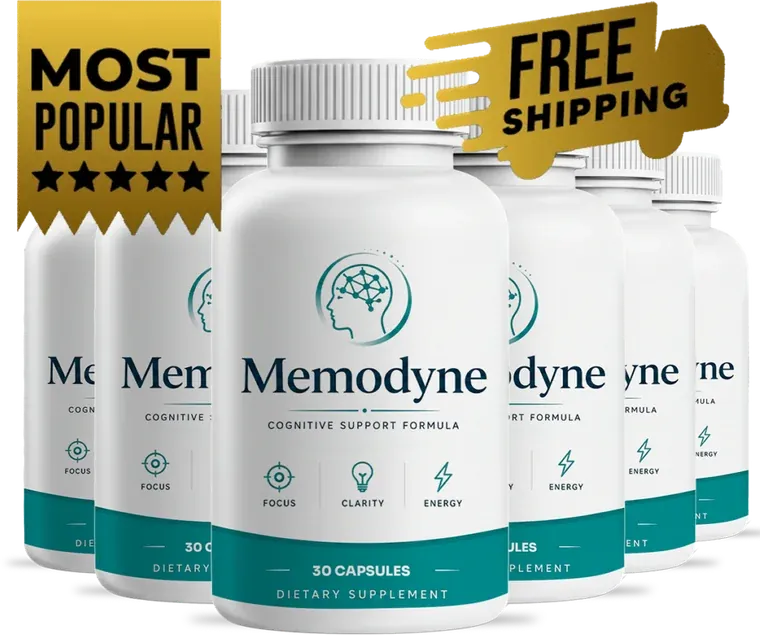
An amino acid the kidneys convert into arginine, which in practice raises arginine levels more reliably than taking arginine itself. It is one of the six named ingredients in the Memodyne formula, and this page covers what it is, its general function, the research context around it and the reason it is included.
Memodyne does not disclose per-ingredient amounts
All six ingredients are named, which is more than many products in this category offer. What is not published is how much of each one a capsule contains.
That matters, because an ingredient's effect depends on its amount, and without figures nothing here can be compared to the doses used in published research. No milligram figures appear anywhere on this website — inventing them would be worse than leaving them out. If you see a page quoting precise amounts for this product, that information is not coming from the manufacturer.
What L-Citrulline HCL in Memodyne Is
L-citrulline is a non-essential amino acid named after watermelon — Citrullus — from which it was first isolated. The HCL form is citrulline bound to hydrochloride, used for stability and solubility.
Unlike arginine, citrulline is not used directly in nitric oxide synthesis. Instead the kidneys convert it into arginine, which then feeds the pathway.
The Research Context Behind Citrulline in Memodyne
Here is the finding that makes citrulline interesting, and it is genuinely counterintuitive: oral citrulline raises plasma arginine levels more effectively than oral arginine does.
The reason is the first-pass metabolism problem. Arginine is substantially broken down in the gut wall and liver before reaching circulation. Citrulline largely bypasses that route, reaches the kidneys intact and converts there, resulting in higher and more sustained plasma arginine.
This is reasonably well replicated and is why citrulline has increasingly displaced arginine in serious formulations. Research has examined it for exercise performance, blood pressure and vascular function, with the strongest signals in vascular measures and endurance contexts. Work on cerebral blood flow specifically is much more limited.
Why L-Citrulline HCL Is Included in Memodyne
It is arguably the most rationally chosen ingredient in the formula. If the goal is supporting nitric oxide production, citrulline is the more effective route to raising arginine than arginine itself.
Including both arginine and citrulline provides an immediate source and a sustained one, which is a coherent design. The HCL form specifically offers stability in a capsule without the added weight of a larger counter-ion.
Responsible Expectations for Citrulline in Memodyne
One caveat deserves emphasis. Citrulline research showing measurable effects typically used substantial daily amounts — frequently several grams. A single capsule containing six ingredients has limited physical space, and since Memodyne's amounts are not published, no comparison to studied intakes is possible.
That is not a criticism of the ingredient, which is well chosen. It is a reason to hold expectations modestly.
Safety notes. Citrulline is generally well tolerated, often better than arginine at comparable doses because it causes less digestive upset. The vasodilation interactions are the same: blood pressure medication, nitrates, PDE5 inhibitors and other vasodilators all warrant a conversation with your doctor first.
How to read the research on this Memodyne page
The research described here examined individual ingredients, usually on their own, at doses set by the researchers. It provides scientific context for why an ingredient is included in a formula.
It does not demonstrate that the finished Memodyne product produces the same outcomes. No clinical trial of this finished formula has been published, so nothing on this website is product-level clinical evidence.
Related Memodyne Reading
The main ingredients page sets out how all six work together across the three pathways, and how Memodyne works explains the mechanisms and their limits in more depth.
Speak to your doctor first if any of these apply
This formula is built around nitric oxide precursor amino acids, which relate to blood vessel dilation. That makes a medication check genuinely important rather than a formality. Show the label to your doctor before your first capsule if you:
- Are pregnant or nursing
- Are under 18
- Take blood pressure medication
- Take blood thinners
- Take nitrate medication
- Take PDE5 inhibitors
- Take any other vasodilator
Memodyne is a dietary supplement for healthy adults. It is not a substitute for prescribed medication or for treatment of any diagnosed neurological or cardiovascular condition.
More Memodyne Ingredients
L-Arginine
An amino acid the body converts into nitric oxide, the signalling molecule involved in relaxing blood vessel walls and supporting circulation.
Arginine bound to alpha-ketoglutarateL-Arginine AKG
Arginine paired with alpha-ketoglutarate, a compound from the cellular energy cycle, included to support absorption and extend the effect.
Citrulline paired with malateL-Citrulline Malate
Citrulline combined with malate, an intermediate in the Krebs cycle, linking the circulation pathway to cellular energy production.
Essential vitamin for NAD+Niacin
An essential vitamin and the precursor for NAD+, the coenzyme central to how cells convert food into usable energy.
Start Your Memodyne Daily Routine
One capsule each morning with a full glass of water, taken alongside the balanced nutrition, hydration and regular activity that support circulation far more than any capsule does on its own. Six named ingredients, no artificial stimulants, and a 60-day money-back guarantee on every order.
From $49 per bottle · Non-stimulant · Free US shipping on 3 and 6 bottles · 5 bonus guides included