Brain Circulation Basics
The brain has no fuel reserve of its own. Everything it needs arrives by blood, continuously.
Why Circulation Matters Before Any Memodyne Routine
The brain accounts for roughly two percent of body weight and consumes around twenty percent of the body's oxygen and a similar share of its glucose at rest. It stores almost none of either.
That combination — high demand, no reserve — makes it unusually dependent on uninterrupted delivery. Blood reaches brain tissue through a dense network of vessels that branch down to capillaries fine enough that red blood cells pass through in single file.
Cerebral blood flow is also actively regulated. The brain adjusts flow to active regions moment by moment, a process called neurovascular coupling, and maintains overall flow across a range of blood pressures through autoregulation. This is a well-managed system rather than a passive one.
What Actually Influences Circulation Alongside Memodyne
The factors with the strongest evidence are, once again, unglamorous.
Aerobic exercise is the most effective single intervention for vascular health. It improves endothelial function — the ability of vessel linings to regulate dilation — and has been associated with measurable changes in cerebral blood flow.
Blood pressure management matters enormously. Sustained hypertension damages small vessels over time, and the brain's small-vessel network is particularly vulnerable.
Not smoking is one of the highest-impact choices available; smoking directly impairs endothelial function.
Hydration affects blood volume and viscosity. Sleep and metabolic health both influence vascular function over the longer term.
The Nitric Oxide Pathway and Memodyne
Nitric oxide is the signalling molecule at the centre of vasodilation. Produced by the endothelial cells lining blood vessels, it signals the surrounding smooth muscle to relax, allowing vessels to widen.
Its discovery was significant enough to earn the 1998 Nobel Prize in Physiology or Medicine, and it underpins several classes of medication.
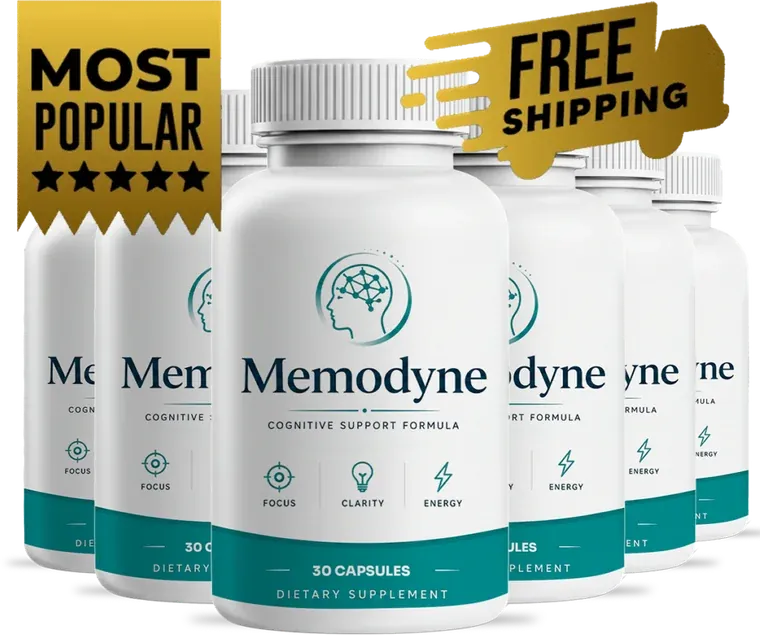
The amino acids arginine and citrulline are precursors in this pathway, which is the basis for their use in supplements like Memodyne. The pathway is established biology; what supplementing precursors achieves for cerebral circulation in a healthy adult is a more open question, and one this site does not overstate.
Where a Supplement Like Memodyne Fits
At the margins, honestly. Exercise, blood pressure management and not smoking do more for vascular health than any capsule, and by a wide margin.
A supplement supporting the nitric oxide pathway is a small addition to that picture. If the foundations are in place and you want something to add, that is a reasonable position. If they are not, the supplement is solving the smaller problem.
How to read the research on this Memodyne page
The research described here examined individual ingredients, usually on their own, at doses set by the researchers. It provides scientific context for why an ingredient is included in a formula.
It does not demonstrate that the finished Memodyne product produces the same outcomes. No clinical trial of this finished formula has been published, so nothing on this website is product-level clinical evidence.
Speak to your doctor first if any of these apply
This formula is built around nitric oxide precursor amino acids, which relate to blood vessel dilation. That makes a medication check genuinely important rather than a formality. Show the label to your doctor before your first capsule if you:
- Are pregnant or nursing
- Are under 18
- Take blood pressure medication
- Take blood thinners
- Take nitrate medication
- Take PDE5 inhibitors
- Take any other vasodilator
Memodyne is a dietary supplement for healthy adults. It is not a substitute for prescribed medication or for treatment of any diagnosed neurological or cardiovascular condition.
More Memodyne Articles
Nitric Oxide and Circulation
A Nobel-winning molecule, why arginine supplements underperform their mechanism, and how citrulline solves the problem.
ScienceCellular Energy and Cognition
How cells actually make energy, what NAD+ has to do with it, and why the brain is such a demanding customer.
ApproachNon-Stimulant Cognitive Support
What you give up when a formula contains no caffeine, what you gain, and how to evaluate something you cannot feel.
FoundationsHydration and Brain Wellness
The most overlooked input to circulation and concentration, and why the eight-glasses rule is less useful than it sounds.
Start Your Memodyne Daily Routine
One capsule each morning with a full glass of water, taken alongside the balanced nutrition, hydration and regular activity that support circulation far more than any capsule does on its own. Six named ingredients, no artificial stimulants, and a 60-day money-back guarantee on every order.
From $49 per bottle · Non-stimulant · Free US shipping on 3 and 6 bottles · 5 bonus guides included